
When someone hears the words “You have cancer”, it should not matter where they live. And yet, quietly and persistently, it still does. Across the UK, people in rural, coastal and more deprived communities are often diagnosed later and treated more slowly than those living near large hospitals and specialist centres. This is not because they neglect their health or wait longer to report symptoms, it is because access is harder, services are stretched and expertise is unevenly distributed.
Recent plans to train more cancer specialists outside major cities are a welcome step because they acknowledge something important: expertise should live where people are. When doctors, nurses, and diagnostic teams are trained locally, they are more likely to stay, to know their communities, and to become trusted parts of the landscape rather than distant names on a referral letter. Training posts alone are not enough. Doctors need time, teams, and tools. They need reliable diagnostics, stable multidisciplinary working, and the sense that caring for patients outside big centres is valued, supported work — not second best.
Earlier diagnosis matter just as much. Many cancers are still found late, especially in poorer communities. If attending an appointment costs time, money or fear, delay becomes understandable. Compassionate healthcare has to take these realities seriously.
At heart, this is about fairness. A health system built on care and solidarity cannot be comfortable with outcomes that depend on a postcode.
These changes will take time, patience, and sustained commitment. But they are worth making. Because cancer already takes enough from people — where they live should not take their chance as well.
Cold Homes, Cold Bodies.
Every winter, fuel poverty affects millions of UK households. It disproportionately affects older adults, single parents, and, owing to their reduced capacity to earn, people with chronic illness.
People living in cold housing are at increased risk of respiratory infections, including pneumonia, cardiovascular events, including heart failure, hypothermia and excess winter mortality. Of course, other factors, such as the winter viruses, take their toll.
In the UK, excess winter deaths (EWDs) are calculated by comparing the number of deaths in the winter months (Dec–Mar) with the average of non-winter months (Aug–Nov and Apr–Jul). Historically, England and Wales saw 20,000–50,000 excess winter deaths per year before the pandemic, rising with severe seasonal conditions. In one recent winter (2020–21), there were about 60,760 EWDs, partly due to COVID-19 alongside cold exposure.
Estimates attribute around 4,700–5,000 excess winter deaths per year directly to cold, damp homes in England, Scotland and Wales — a marker of fuel poverty and deprivation.
Previous analyses suggest about 10% of excess winter deaths are directly linked to fuel poverty and 21.5% to cold homes specifically.
A UK analysis found that in the last decade, a quarter of a million older people died from cold-related illness — roughly one older person every 7 minutes — with poor housing a key driver. A Europe-wide study estimated approximately 363,500 deaths annually from cold exposure, compared with ~43,700 from heat (baseline 1991–2020).
Winter places stresses upon healthcare systems. The sometimes critical increases in respiratory virus infections mean that the services are less able to cope with diseases associated with cold housing. There is a knock-on effect. Further, children from cold homes have higher rates of asthma exacerbations and missed school days. Winter in the Northern Hemisphere involves some of the richest countries on Earth. Still, there is fuel poverty, homelessness, suffering, morbidity and increased mortality. Resources that could help the poor and unsheltered are being hoarded by a small percentage of the population. The excess deaths seen in winter are not a meteorological or even a purely medical phenomenon. They are a social problem. Like poverty, cold is not a lifestyle choice.

Health Inequality in Cancer Care.
Every year in the UK there are an estimated 30,000 new cases of cancer which are attributable to socio-economic deprivation, with cancer of the lung the neoplasm most strongly associated with poverty.
Healthcare Inequality - defined as unfair, systematic and avoidable differences in health between groups - exists across the cancer spectrum and has become worse since the onset of the pandemic.
Poorer communities tend to have higher levels of risk factors (for example: smoking, obesity), less awareness of the consequences of poor lifestyles and of the importance of specific symptoms, greater barriers to seeking help and lower uptake of screening programmes.
The trend towards distance consultations, present before the pandemic but much increased since, is also a potential factor. Not only is the uptake of screening lower in deprived communities, the availability of technology required for teleconsultations is also less complete.
The Inverse Care Law.
Those in most need are the least likely to receive help.

The UK loses its measles elimination status.
According to the World Health Organisation, the UK has recently lost its measles elimination status, defined as “No endemic (continuous) transmission for 12 months or over, with high-quality surveillance”. Imported cases and small outbreaks can still occur.
This follows a notable recent increase in measles cases, with several thousand confirmed infections and at least one child’s death reported. Sustained transmission, and so the number of cases, is a consequence of a reduction in the coverage of the MMR vaccine, which has declined below the 95 % threshold needed for herd immunity.
Measles is one of the world’s most contagious viral diseases; outbreaks are occurring in many countries where vaccination coverage has fallen. Most high-income countries have NOT eliminated measles reliably and loss of elimination status is now common, not exceptional. The problem is not vaccine failure, but vaccine coverage and uptake.
Measles remains a reliable marker of health-system equity and trust
Measles elimination is increasingly fragile in high-income countries. Though much of this fragility can be blamed upon serious wealth inequality, much is due to the reduction in vaccine uptake - often inexplicably promoted by global interests - with a consequent overall reduction in measles immunity.
This vaccine avoidance has already led to increased numbers of children being treated in intensive care units and to avoidable deaths.

Beetroot and High Blood Pressure.
A recent study at the University of Exeter has found that beetroot can help lower blood pressure in the over 60s.
Beetroot (and other nitrate-rich vegetables) can lower blood pressure, mainly by boosting nitric oxide (NO) via the nitrate - nitrite - nitric oxide pathway, which relaxes blood vessels and improves the function of the blood vessel wall.
The study found that adding beetroot to the diet had an effect upon oral bacteria in the older person, with an increase in useful bacteria and a decrease in harmful bacteria. There was an associated, if mild, drop in blood pressure. These changes were not seen in the younger participants, who are more likely to have normal blood pressures and a healthy oral bacteria population.
Other studies have found a small reduction in both systolic and diastolic pressures associated with regular dietary beetroot, though the evidence strength is low.
It must be realised that beetroot is not a treatment for high blood pressure but can help as an adjunct to medically recommended therapy, and, for those who don’t like beetroot, other vegetables such as rocket/arugula, spinach, lettuce, Swiss chard, celery (often comparable or higher nitrate density than beetroot, depending on growing conditions) are alternatives.
The Creeping Cold has fingers.
Figures for the effects of cold weather upon mortality in the UK for the winter of 2024/5 have been released.
Over a period of 10 days, involving three cold spells, the temperature fell to less than 2 degrees Centigrade (yellow cold warning), and was associated with a total of 2544 deaths. Diseases of the heart and circulation were responsible for the majority of the deaths, with respiratory causes and infections following closely.
Cold weather increases risks by increasing the stresses on the body, affecting its ability to maintain a healthy temperature. Stress and lower body temperatures increase the susceptibility to infection while snow and ice increase the risk of falls and injuries.
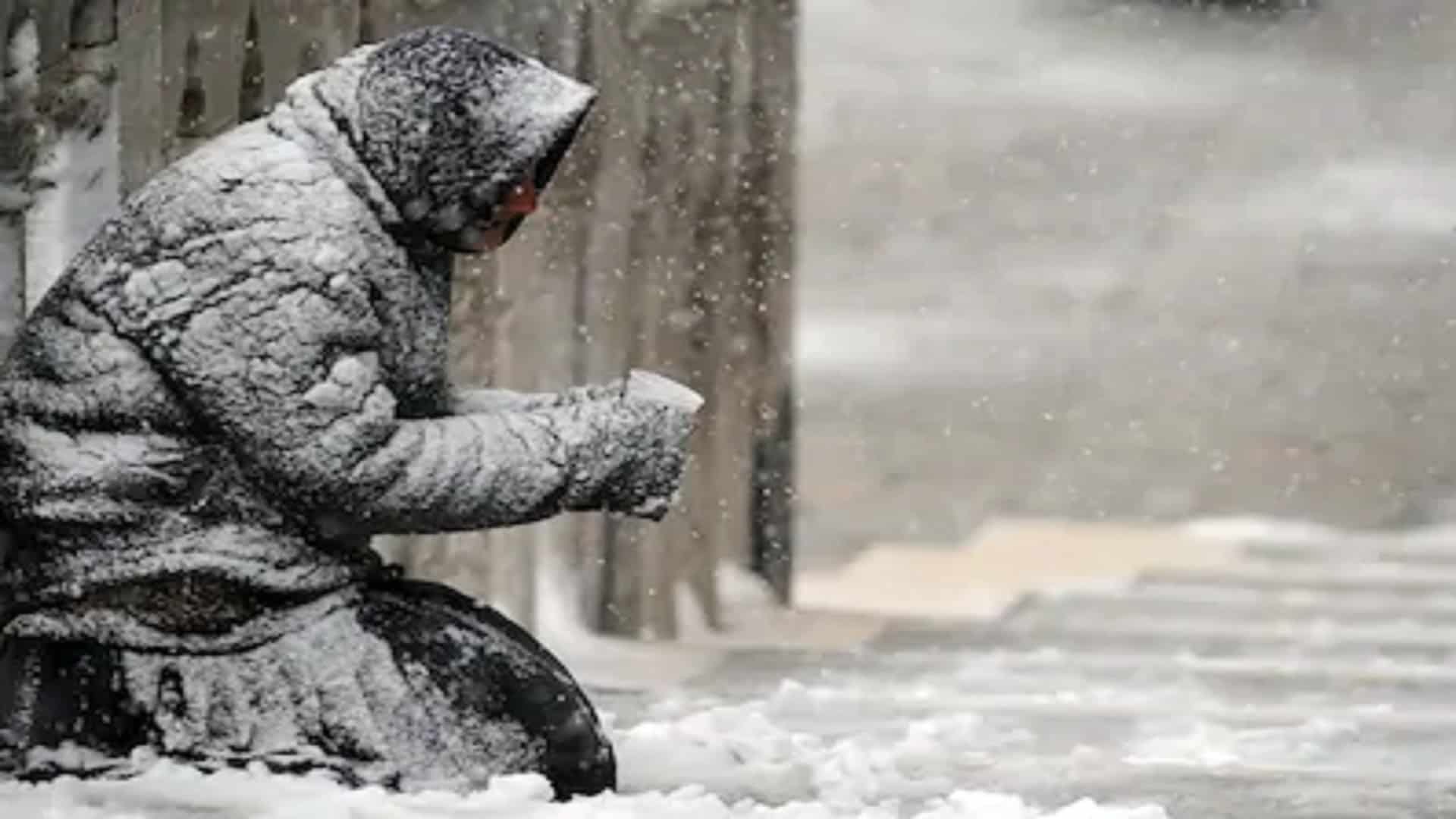
Those at most risk are the elderly, the frail, those with chronic diseases, the poor, homeless and undernourished. Again, the inequalities of society in an acknowledgedly rich country put some in comfort and rude health while others suffer and die.
New Flu strain emerging.
Reports in the British Medical Journal have shown an increase in flu cases in the UK, mainly among young adults and school children. This appears to be due to a new H3N2 strain, which has mutated several times over the summer and has increased in severity.
Though this is not an entirely new strain, there are sufficient differences for it to side-step community immunity and vaccine cover. That is side-step, not dodge. Existing acquired immunity still offers some protection, and this can be ‘topped up’ by this year’s vaccine.
The advice remains as before: take sensible precautions to avoid spread, use masks in public places, wash your hands and ... get vaccinated.
Infectious diseases watch.
Two cases of Nipah virus infection have been confirmed in West Bengal, India in early 2026, both in healthcare workers. Rapid contact tracing and testing (~196 contacts) have identified no additional cases, and the World Health Organization currently assesses the risk of wider spread as low.
Nipah virus, a zoonotic pathogen carried by fruit bats, can cause severe respiratory and neurological illness with a high fatality rate (40–75%), but human-to-human transmission tends to require close, prolonged contact.
There is no vaccine or specific treatment; management is supportive. Several Asian countries have heightened traveler screening as a precautionary measure.
At present, the outbreak appears contained, and the global risk remains low, though vigilance and strong surveillance continue to be important.
Resources
Keeping people warm:
Fuel poverty is one of the most preventable winter health risks:
National Energy Action - Advice, advocacy, and direct support for households struggling to heat their homes.
Citizens Advice - Eligibility checks for energy grants, benefits, debt advice, and crisis support.
GOV.UK – Winter Fuel Payment & Cold Weather Payment - Direct financial support for older people and low-income households during cold spells.
Energy Saving Trust - Advice on insulation, heating efficiency, and grants that reduce long-term cold exposure.
Health, Aging and Vulnerability.
Age UK - Winter warmth programmes, befriending services, benefits advice, and local outreach
NHS - Stay Well This Winter - Vaccination, respiratory illness prevention, and advice for carers and vulnerable adults.
Royal Voluntary Service - Volunteers delivering food, companionship, and support to isolated older people.
Trussell - Volunteers delivering food parcels, foodbanks around the UK.