
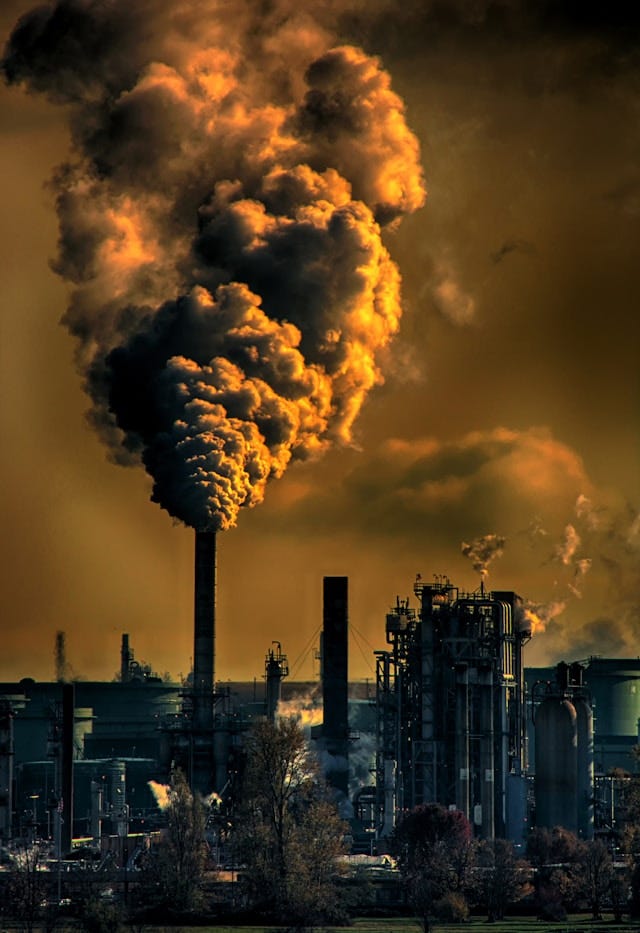
Climate change, defined as long-term changes in temperature and increases in extreme weather caused by greenhouse gases, has been called “the greatest global health threat of the 21st century”.
Though of concern, climate change isn’t just about increased rainfall and flooding, hotter summers with devastating wildfires, or melting ice caps — it also affects our health in many other ways.
Those working in healthcare are already seeing the impact; these problems will only increase if nothing is done to reduce emissions.
How can climate change affect health?
A rise in temperatures increases the risks of heatstroke and dehydration, leading to kidney problems, and can make worsen heart and lung problems.
Air quality suffers with climate change. Rising temperatures make air pollution and pollen counts worse, increasing asthma attacks, worsening bronchitis and making allergies worse. Air pollution at ground level worsens and this can adversely affect heart and circulatory disorders, leading to an increased risk of heart attacks and strokes. The increase in temperature can trap traffic pollution, particularly ozone, at ground level. This causes inflammation and damage to the lung and cardiovascular system.
Of course, extreme weather events such as hurricanes, floods and wildfires, made much more likely by climate change, pose a physical threat to health and well-being, as well as to property and the economy.
The spread of warmer, wetter weather from the tropics will increase the range of countries where insect disease carriers, mosquitoes and tics primarily, can live and breed. And where they live and breed is where they also bite. Diseases such as malaria, Dengue fever, Zika, Chikungunya, Lyme disease are expected to spread, becoming more of a health risk in the formerly milder climes.
With the increased risk of flood comes an increased risk of waterborne disease such as cholera and Cryptosporidiosis, warmer oceans mean an increased risk of Vibrio cholerae infections, and there will be an increase in salmonella risks with heat-associated food spoilage.
Crop failure and shortage of water will lead to malnutrition, dehydration and famine, poor sanitation with associated health risks, and displacement pressure upon populations.
There are no health benefits to climate change.
Is another pandemic brewing in China? - the enigma of hMPV.
Is another pandemic brewing in China? - the enigma of hMPV.
Social media and the more sensationalist mainstream media in particular have become heated recently with rumours of a sharp rise in respiratory infections, with overcrowded hospitals and strained health services, in China.
The scare has been provoked by a rise in the incidence of viral respiratory infections, particularly in Human Metapneumovirus (hMPV) infections.
Human Metapneumovirus, like all colds viruses, is spread by droplets (coughing and sneezing) and by contact. It exists worldwide and, by the age of 5 years, just about everyone will have had an hMPV infection. Infections are seasonal and account for between 5 and 10\% of winter paediatric hospital admissions, a proportion similar to that of the Respiratory Syncytial Virus (RSV). Both are significant causes of bronchiolitis in infancy.
Like many respiratory viruses, hMPV rarely causes problems except in the very young, the very old, those with co-existing conditions (COPD, heart disease) or those with a compromised immune system.
The current situation in China is similar to that in the rest of the world, with hMPV infections contributing their usual proportion of seasonal viral chest infections. There was an unusually high incidence last year, but this has been ascribed to a lower community resistance to the virus following the measures, particularly isolation measures, taken during the Covid-19 pandemic. There have been no changes in the makeup of the virus which would make it a greater threat.
There is nothing to suggest that a new pandemic involving hMPV is likely in the near future.
Is missing breakfast bad for your health?

A recent analysis of several observational studies found that people who skipped breakfast had a statistically higher risk of developing metabolic syndrome (defined broadly as a combination of risk factors such as high blood pressure, high blood sugar, abdominal obesity, raised lipids) compared with those who ate breakfast.
Metabolic syndrome is an important warning sign for future problems like type 2 diabetes, cardiovascular disease and kidney disease. Anything that helps identify modifiable risk factors (like when or even if you eat) may be useful for prevention.
Regular breakfast-eating might be more important than we think—so don’t assume skipping breakfast is always harmless.
However, other aspect of behaviour, such as sleep quality, diet, exercise and socioeconomic status might play a similar or even more important role.
The Rise in Antimicrobial Resistance.

A study from the London School of Hygiene \& Tropical Medicine (LSHTM) highlights that as European populations get older, the burden of antimicrobial-resistant bloodstream infections is expected to increase substantially, particularly in men over 65.
Drug-resistant infections - so-called “superbugs” - are a major global health threat. Hospitals, care-homes and older people are especially vulnerable. An ageing population means that the problem might become worse. The UK’s surveillance programme (English Surveillance Programme for Antimicrobial Utilisation and Resistance — ESPAUR) reports that in England the number of severe antibiotic-resistant infections increased from an estimated ~59,171 in 2018 to ~66,730 in 2023 — a ~12.8 \% rise.
The number of estimated deaths from drug-resistant infections rose from 2,393 in 2019 to 2,640 in 2023. 65 \% of the antibiotic-resistant bloodstream infections in the last five years were caused by Escherichia coli. People in the most deprived areas have a 43\% higher risk of antibiotic-resistant infection compared to the least deprived, up from ~29 \% in 2019.
When an infection is resistant to first-line antibiotics, treatment gets more complex, expensive, longer, with more side-effects and greater risk of complications or death. This increases the burden on hospitals, care-homes, and the NHS budget — both directly (treatment) and indirectly (more hospital days, more intensive care).
It affects everyone: even “routine” infections could become harder to treat in future if the trend continues.
Drug-resistant infections also threaten the foundations of modern medicine: many surgeries and treatments depend on reliable antibiotics (e.g. cancer chemotherapy, joint replacements).
The antibiotics we have relied upon are not invincible — older adults especially may face higher risks of infections that are harder to treat, which means prevention (vaccines, hygiene, stewardship) becomes more important.
It is more important than ever to use antibiotics only when prescribed and needed (they are ineffective and so not useful for viral infections) and to finish the full course so that hidden resistant bacteria don’t survive.
It is also very important to practise good hygiene, especially in hospitals and when visiting (hand-washing, social distancing when unwell, etc.) and to stay up to date with vaccines, since preventing infections reduces need for antibiotics.
Hospital at Home.

The push in the UK for remote monitoring, telehealth, use of health-data analytics and digital patient pathways is still accelerating, especially as hospitals and GP services face capacity issues. The hold-up has been not just the technology -appropriate technology has been available for some time - but data governance, interoperability, workforce training, and equity of access.
As flu, respiratory viruses and drug-resistant infections place more pressure on acute services, digital and remote-care models may allow for better triage and monitoring at home, and help to reduce avoidable admissions.
Remote consultations might become even more common with increased use of wearable monitoring and remote diagnostics. There is already diagnostic potential built in to computerised wristwatches.
Access is important for the scheme to be successful, and the “digital divide” - for example, the availability of broadband - could reinforce inequalities.
This is not a new idea. Versions of the hospital at home have been tried over the past two decades but have faltered due to poor funding and insufficient foresight and imagination.
Subscribers.
Subscription allows access to more in-depth articles suited particularly to healthcare workers, or those simply interested in health, medicine and the science behind it.
There will also be available for download educational and teaching aids such as A3 posters outlining the information in each article.